The 49% Rule: Navigating Middle Tennessee's Logistical Map of Private Education
March 9, 2026
7 min read
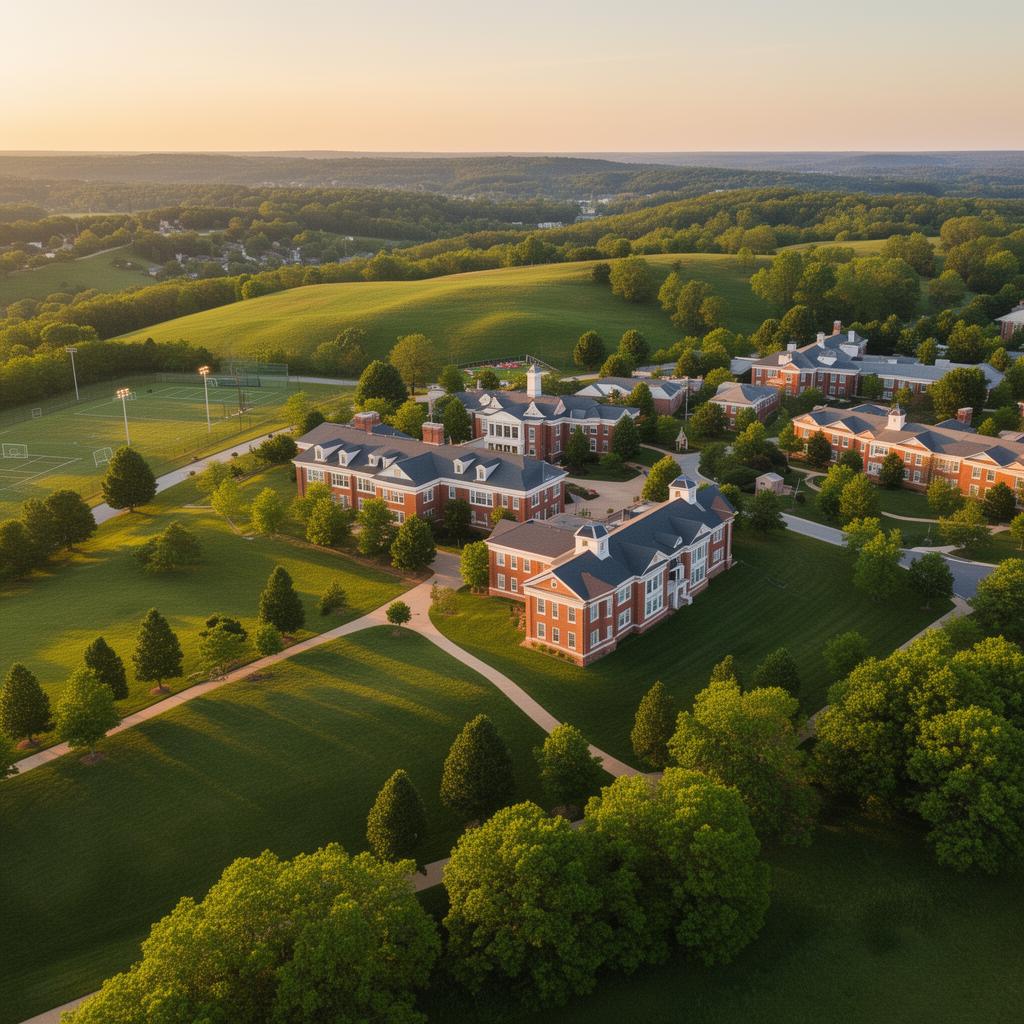
The Hidden Map of Family Life
In the rapid expansion of Middle Tennessee, from the glass towers of Nashville's urban core to the pastoral stretches of Maury County, a family's "path to tomorrow" is increasingly paved with asphalt. While parents spend hours debating curriculum and character, geography remains the silent architect of the modern educational experience. The challenge for the sophisticated professional in this region isn't just finding a school with academic rigor; it is solving the logistical puzzle of the I-65 corridor. In a landscape where professional hubs and residential sanctuaries are often miles apart, the intersection of commuting patterns and school locations has become the defining factor in family work-life balance.
The 49% Rule: Why Proximity is the Ultimate Luxury
Data from the Williamson County Chamber of Commerce highlights a pivotal trend: 49% of the Williamson County labor force lives and works within the same county. For the lifestyle strategist, this "staying local" trend is the ultimate indicator of success. Proximity is no longer just about fuel efficiency; it is about the luxury of presence. Choosing a school within your professional "home base" means the difference between attending a 4:00 PM fine arts showcase or being trapped in a commute while the curtain rises. Institutions like Franklin Road Academy (FRA), which serves 1,130 students on a single, unified campus, exemplify the logistical win of the "one-stop" model. By collapsing the distance between the office, the classroom, and the home, families avoid the fragmentation that leads to burnout.
Lifestyle Strategy
"Because logistics matter to busy families with active kids."
The 27-Minute Reality Check
The average commute for the Nashville Regional area is clocked at 27 minutes, but that figure only tells half the story. The region is defined by a rhythmic "migration" of inbound and outbound flows. Williamson County, for instance, sees significant inbound flow from Maury (23.3%), Rutherford (6.8%), and Davidson (6.4%).
To understand these flows is to understand the "waystation" strategy of school selection. An "inbound" flow represents the workforce entering a county for employment, while "outbound" represents residents leaving their home county for work. For many parents, schooling near the office rather than the home is a strategic hedge against the 27-minute average. If a parent living in Columbia or Spring Hill works in Brentwood, an inbound school choice ensures they are minutes, not hours, away from their child in the event of a mid-day need.
From 12 Months to 12th Grade: The Rise of the Long-Term Campus
The modern Middle Tennessee parent is increasingly opting for "cradle-to-college" pathways to eliminate the stress of repeated school transitions. The regional market has responded with comprehensive campuses that offer a single shared mission from infancy through high school graduation. Notable examples include:
- Goodpasture Christian School: Offering a continuum of care from 12 months through 12th grade.
- Davidson Academy: Providing a Christian foundation for 700 students, starting as early as 6 weeks old.
- Nashville Christian School: Serving a diverse student body from 6 weeks through the senior year of high school.
The appeal of these campuses is as emotional as it is practical. For a family with three children of varying ages, a single drop-off point is a tactical triumph that protects the family's morning peace.
A Century of Tradition vs. Modern Specialization
The educational ecosystem of Middle Tennessee is a sophisticated blend of deep-rooted legacy and hyper-specialized modern offerings. Parents are often weighing the prestige of history against the benefits of specific pedagogical models. We see this in the 100-year legacy of Father Ryan High School (established 1925), which serves 863 students, and the venerable St. Bernard Academy, a Nashville fixture since 1866.
However, the strategist also recognizes the value of specialized "niche" programs that justify a longer drive. Whether it is the Spanish Immersion and Montessori-inspired International Baccalaureate model at Stellaris International School or the "Special Focus" mission of Currey Ingram Academy in Brentwood, parents are proving that for the right specialization, be it Waldorf, Classical, or IB, the trade-off of a 27-minute drive is a worthy investment. The market has evolved from general traditionalism into a diverse ecosystem where specific developmental needs dictate the GPS coordinates.
The "Logistics-First" Education Strategy
For the mobile workforce, the Private School Map is an essential tool for geographic filtering. Schools are strategically categorized by county, Davidson, Maury, Rutherford, Sumner, Williamson, Wilson, and Franklin, to serve the distinct hubs of the regional economy.
- Davidson: The traditional core for institutions serving the urban professional.
- Williamson & Maury: The southern corridor where growth and "work-proximate" schooling intersect.
- Rutherford & Wilson: Providing established Christian and traditional options for the eastern and southern growth rings.
The modern parent isn't just choosing a curriculum; they are choosing a "pathway" that integrates into their specific regional commute, ensuring that education and career exist in harmony rather than conflict.
The Future of the Regional Family
While academic excellence remains the non-negotiable North Star, evidenced by the National Blue Ribbon status of schools like Holy Rosary Academy, the silent architect of school choice remains geography. Excellence is the goal, but logistics are the vehicle that makes that goal sustainable for the modern family.
As you evaluate your family's future, consider the slogan of Harding Academy: "Your path to tomorrow." It is a profound prompt for any Middle Tennessee parent to ponder: Is your child's path being shaped more by your deeply held educational values, or by the daily directions on your GPS? Navigating both is the true hallmark of a successful Middle Tennessee lifestyle strategy.